



I tested the platform and compared my experience with ManyRequests reviews to understand how it performs for teams in 2026.
Quick verdict: TL;DR
ManyRequests was easy to set up, and I like that it’s built with creative teams in mind. It handles simple client requests well, but features like time tracking and design feedback are locked behind higher tiers. Costs also climb quickly once you start adding team seats. It’s a solid fit for small studios, but growing teams may hit limitations as their workflows get more complex.
What is ManyRequests?
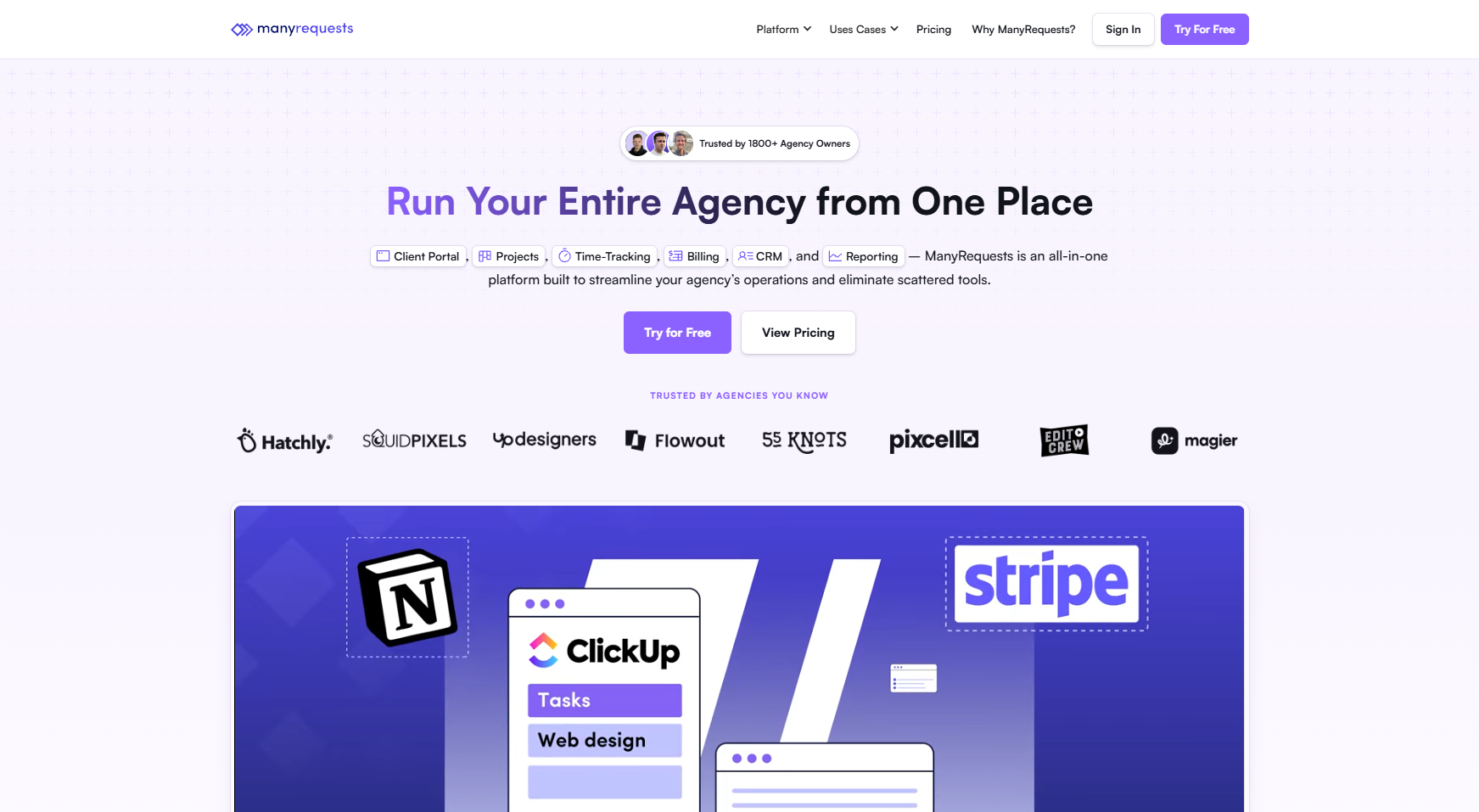
ManyRequests is a client portal and request management platform built for creative, design, and service-based teams. It brings requests, files, payments, and service listings into one place so agencies can manage tasks and deliver work without jumping between tools.
The platform includes structured request forms, simple project tracking, subscriptions, checkout pages, and internal comments. Higher plans add custom branding, design feedback tools, and more control over the client experience.
Because so much depends on the plan you pick, my ManyRequests pricing guide breaks down each tier, how internal seats are counted, and which plan fits which team.
ManyRequests key features
ManyRequests includes tools that help agencies manage client requests, services, and communication in one organized system. Let’s take a look at the core ManyRequests features below:
- Document sharing: Teams can upload files, group them into requests, and keep updates tied to each delivery.
- Client portal: Clients access a dedicated space to submit requests, review files, and see their service activity. Branding options unlock on higher plans.
- Service listings: Agencies can publish preset services, packages, and credit-based offers that clients can buy directly.
- Payments and billing: Stripe supports subscriptions, one-time purchases, and manual invoice collection inside the same workspace.
- Design annotations: Clients can comment on design files and leave visual feedback on the Pro plan or higher tiers.
- Time tracking: Teams can record hours for tasks and projects once they upgrade from the entry plan.
- Internal notes: Team members can add private context to requests without showing those messages to clients.
- Meeting links: Zoom and Google Meet integration appear on higher plans for easier scheduling.
- Integrations: Zapier and other app connections unlock on higher plans for teams that need connected workflows.
ManyRequests reviews: What real users are saying
I reviewed recent feedback from G2, Reddit threads, agency blogs, and user comments. Most reviews highlight simple client communication and tidy request handling. The most common complaints involve pricing, storage limits, and paywalled features.
Here’s what users say about their experience with ManyRequests:
Pros
- Easy request workflow: Users say the request system is simple and helps clients send the right information the first time.
- Clean layout: Reviews highlight the straightforward interface, which works well for small creative teams.
- Unlimited clients: Agencies appreciate that they can add as many clients as they need without hitting a limit.
- Built-in payments: Teams value having checkout forms, subscriptions, and invoices in one place instead of using separate tools.
- Basic brand control: Mid and higher plans offer more polished client-facing pages.
Cons
- Feature gaps at the starter tier: Time tracking, design annotations, and integrations only appear on higher plans.
- Pricing climbs quickly: Reviewers mention the cost of extra team seats and the need to upgrade sooner than expected.
- File size limits: Uploads max out at 10 GB, which is tough for design and video teams.
- Limited automation: Workflows are simpler than what other platforms offer for complex operations.
- Fewer collaboration tools: Larger teams want more granular roles and more advanced project tracking.
Overall, it seems that users like the simplicity but want more flexibility without upgrading to higher tiers.
My personal take on ManyRequests
I get why small design studios pick ManyRequests. It’s simple, tidy, and easy to work with. It gives teams a clear place to collect requests and keep client work moving. The request forms help clients share the right details, which cuts out the back and forth that slows projects down.
A few limitations become obvious when your workload grows. Time tracking and design feedback are locked behind higher tiers. Zapier unlocks only after an upgrade. Full branding sits at the top plan. Pricing also jumps once you add more than a few team members. These gaps can make it harder for agencies that plan to grow.
For small teams with steady, predictable delivery, ManyRequests does the job. For agencies with more tasks, more people, or more complex workflows, I’d recommend trying a different tool.
Is ManyRequests right for you?
ManyRequests fits teams that want predictable client communication and a focused portal for delivering services. It works well for agencies that sell set packages or credit-based offers, and it suits teams that prefer a clean workspace without heavy setup.
Here’s how to tell if ManyRequests suits your business:
Who will love it
- Small creative studios: Teams that deliver design or content work in steady cycles often find the request system helpful.
- Agencies with fixed service menus: Businesses built around packaged services, credits, or subscriptions can use the structured setup effectively.
- Teams wanting simple client communication: The portal keeps conversations and files in one place, which helps clients stay organized.
Who should avoid it
- Growing agencies: Costs rise quickly as you add team seats, and key features require higher tiers.
- Teams needing deeper automation: Complex workflows or multi-step processes may feel limited by the available tools.
- Businesses that handle large files: The 10 GB file size limit can be restrictive for video, animation, or heavy design work.
The best ManyRequests alternative: Assembly
A lot of ManyRequests reviews mention limits around file handling, automation, and team pricing. That matches what I saw while testing it. It works well for simple client work, but growing teams may run into constraints.
If you want to compare more options first, my list of the 10 best ManyRequests alternatives covers the tools I would look at for running a service business.
Assembly takes a different path. We designed it to connect post-sales CRM tools with billing, communication, and client records. It also supports pre-sales workflows with custom fields, internal notes, private-only chat, and the ability to create clients without sending an invite.
Here’s what you can do with Assembly:
- See the full client record: Notes, files, payments, and communication history stay linked in one place. You never have to flip between systems or lose context when switching from sales to service.
- Prep faster for meetings: The AI Assistant pulls past interactions into a clear summary so you can walk into any call knowing exactly what’s been discussed and what’s next.
- Stay ahead of clients: Highlight patterns that may show churn risk or upsell potential, making outreach more timely and relevant.
- Cut down on admin: Automate repetitive jobs like reminders, status updates, or follow-up drafts that used to take hours. The Assistant handles the busywork so your team can focus on clients.
- Track team performance: View active projects, overdue invoices, or pending approvals in one dashboard to keep your operations running smoothly.
- Give clients a branded experience: Share updates, invoices, and documents through a professional client portal that reflects your business identity.
- Sell and onboard clients faster: Storefronts lets you package and sell your services online. Once a client pays, their account and portal are created automatically, and onboarding starts right away.
Want a platform that grows with your client base? Start your free Assembly trial today.