


After reviewing social media contract templates for agencies, freelancers, and influencers, I’ve put together 5 customizable options that cover common scenarios creators and managers run into.
5 free downloadable social media contract templates
A contract is one step in bringing on a new client. For the rest, see how to onboard clients in 6 stages, and these 5 options if you need a client portal template.
Not sure which one you need? We created customizable templates that you can download as Word docs or PDFs. Here's a quick look at the templates covered in this article:
- Influencer agreement template
- Social media management template
- Video creation template
- Affiliate marketing template
- Social media strategy template
Need an intake form to go with the contract? These 7 client intake form examples come with templates, including one for bookkeeping clients.
Disclaimer: This article is for informational purposes only and does not constitute legal advice. The contract templates provided here are general examples and may not suit your specific business needs or comply with local regulations. Always consult a qualified attorney to review or create contracts for your business.
What is a social media contract template?
A social media contract template is a pre-drafted outline that sets the terms between you and a client for social media work. It covers what you'll deliver, when you'll deliver it, how much you'll get paid, and who owns the content you create.
The template gives you a starting point so you don't write contracts from scratch every time. You fill in the specifics for each project, like your rate, the platforms you'll manage, posting frequency, and approval processes.
Many templates include sections for scope of work, payment schedules, revision limits, content ownership rights, and termination clauses.
Client portal platforms like Assembly also let you send contracts with built-in e-signatures so clients can sign immediately.
When should you use a social media contract template?
You should use a social media contract template before starting any paid social media work. This includes one-time projects, monthly retainers, content creation packages, and influencer partnerships.
Use a contract when you're:
- Working with a new client: Lock in terms before creating any content or posting anything. This prevents disputes about deliverables and payment. I've seen too many creators start posting without signed agreements, then struggle to collect payment when clients claim they "expected more."
- Transitioning from informal to paid work: If you've been helping someone casually and they want to start paying you, a contract makes the relationship official and professional.
- Managing accounts long-term: Monthly retainers need clear terms about what happens if either party wants to end the arrangement. You also need details on content approval and posting schedules. Without a contract, clients can drag out cancellations or dispute final invoices.
- Creating content for brands: Any work where you're producing posts, graphics, videos, or strategy documents should include ownership and usage rights in writing. I recommend clarifying whether you can use the content in your portfolio or if the client gets exclusive rights to everything you create.
- Running paid campaigns: If you're managing ad budgets, the contract should specify who owns the ad accounts, how billing works, and what happens to campaign data.
What to include in a social media contract template
A solid social media contract template needs specific sections that protect both you and your client. Missing one can cause issues when scope changes or disputes come up.
Here are the key components every social media contract should include:
- Parties and contact details: List full legal names and addresses for both sides. If you're working with a company, include the business entity type and the person authorized to sign.
- Scope of work: Define exactly what you're delivering. List the platforms you'll manage, posting frequency, content types, and approval processes. Be clear about what's not included. In my experience, the "not included" part matters just as much as what you promise to deliver.
- Timeline and milestones: Set deadlines for deliverables and specify when you need materials from the client. Link payment to these milestones when possible.
- Payment terms: Spell out your total fee, payment schedule, and what happens with late payments. Include your deposit amount and when remaining payments are due. I always recommend requiring at least 50% upfront to protect your cash flow, but you can negotiate terms.
- Content ownership: Clarify who owns the posts, graphics, videos, and strategy documents you create. Define whether the client gets full ownership or a license to use your work.
- Confidentiality: Outline what information stays private and for how long. This covers client data, campaign strategies, and any proprietary information you access.
- Termination policy: Explain how either party can end the contract early and what it costs. Include notice periods and what happens to work in progress.
- Change orders: Set up a process for handling requests outside the original scope. Define how pricing adjusts when clients add platforms, increase posting frequency, or request additional services.
And if you’d like to take a shot at creating your own contract, this guide may help.
5 free social media contract templates
Social media work varies from one-time sponsored posts to ongoing retainer agreements, and your contract needs to match the type of engagement you’re entering.
Here are five templates that cover the most common scenarios:
1. Influencer agreement template
An influencer agreement template covers brand partnerships where you create sponsored content promoting a company’s product or service. This template includes sections for content deliverables (posts, stories, reels), usage rights for the brand, FTC disclosure requirements, and payment terms based on engagement or flat fees.
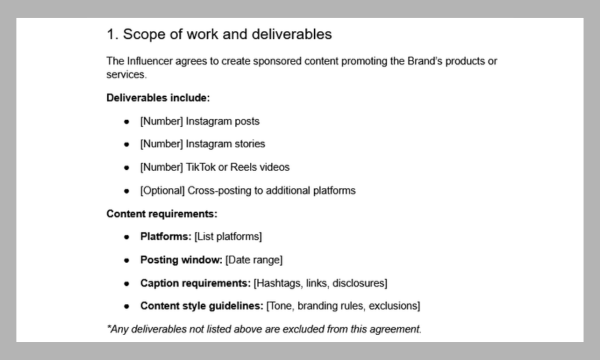
Use this template when brands approach you for sponsored posts, product reviews, or ongoing ambassador relationships. I recommend being very specific about how many revisions the brand gets and whether they can use your content in paid ads without additional compensation.
Download the influencer agreement template
2. Social media management template
A social media management template covers ongoing account management where you handle content creation, scheduling, community engagement, and strategy for a client's social media presence. This template includes clauses for platform access, content approval workflows, posting frequency, and monthly reporting requirements.
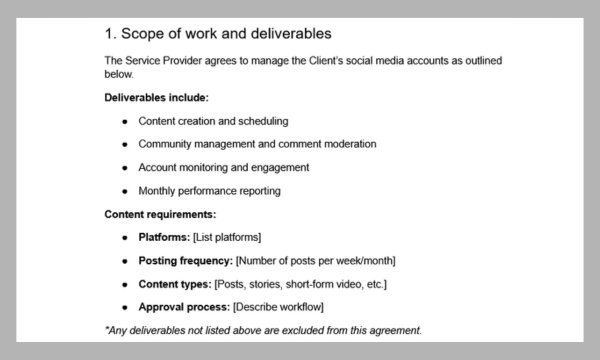
Use this template for retainer relationships where clients need consistent social media support. In my experience, the biggest issues come from unclear approval processes, so I've included specific turnaround times in the template for client feedback and what happens when approvals are delayed.
Download the free social media management template
3. Video creation template
A video creation template covers projects where you're producing video content for social platforms like YouTube, TikTok, Instagram Reels, or LinkedIn. This template includes sections for video length, revision rounds, raw footage ownership, and licensing terms for music or stock footage.
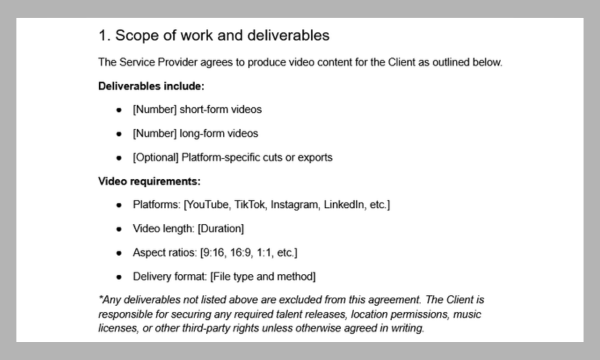
Use this template when clients hire you specifically for video production rather than full account management. I always clarify whether clients get the raw footage or just the final edited videos, since that's a common point of confusion that can derail projects.
Get the video creation template here
4. Affiliate marketing template
An affiliate marketing template covers partnerships where you promote products or services through your social channels and earn commission on resulting sales. This template includes sections for commission structure, tracking methods, payment schedules, and content requirements from the brand.
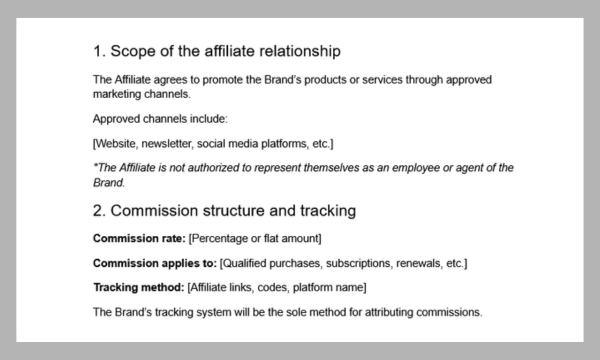
Use this template when companies offer you affiliate partnerships rather than flat-fee sponsorships. The template addresses minimum payout thresholds, how long your affiliate link stays active, and what happens if the brand changes commission rates mid-partnership.
Download the template for affiliate marketing
5. Social media strategy template
A social media strategy template covers consulting engagements where you develop strategic plans, audit existing efforts, or train teams on social media best practices. This template includes sections for deliverables like strategy documents, competitive analysis, and content calendars, plus intellectual property terms for your frameworks and recommendations.
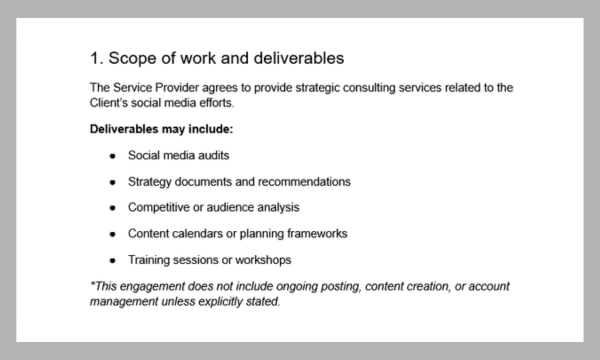
Use this template when clients hire you for your expertise rather than ongoing execution. I've found that strategy clients often want to reuse your frameworks with other teams or future hires, so the IP section clarifies what they can and can't repurpose without your permission.
Get the social media strategy template
Benefits of social media contract templates
Using a contract template saves time and protects your business when client relationships get complicated. Here's what a solid contract does for you:
Prevents scope creep
A detailed scope of work stops clients from adding more work without adjusting your fee. This reduces the “oh, could you do this thing too?” requests that pile work on for no extra compensation.
When your contract specifies three Instagram posts per week, you're not obligated to suddenly start managing TikTok too. I've seen many social media managers burn out because they couldn't point to written boundaries when clients kept expanding expectations.
Protects your payment
Clear payment terms mean you get paid on time, or you have legal recourse when you don't. The contract locks in your deposit, payment schedule, and what happens with late invoices. If a client ghosts you after you've delivered half the content, you have documentation proving what they owe you for completed work.
Clarifies content ownership
Who owns the Instagram graphics you created? Can the client use your strategy document with their next social media manager? Can you show the campaign in your portfolio? The contract answers these questions upfront. In my experience, ownership disputes are the hardest to resolve without clear contract language, especially when relationships end badly.
Sets professional expectations
A contract shows clients you take your work seriously. It establishes communication protocols, approval timelines, and what counts as a deliverable. When both parties know you respond to emails within 48 hours and need content approval within three business days, there's no confusion about who's holding up the project.
Creates an exit strategy
Relationships don't always work out, and contracts define how to end them cleanly. Your termination clause explains notice periods, what happens to work in progress, and final payment obligations. This prevents messy situations where clients demand refunds for completed work, or you're stuck finishing projects for clients who stopped paying.
Keeps revisions from spiraling
Clients will request changes. The contract's change order process means you can say yes to new requests while adjusting your fee and timeline accordingly. Without this structure, you're either saying no to reasonable requests or doing extra work for free.
Manage social media contracts and client work in one place
A social media contract template protects your work, but signed agreements still need to live somewhere. Many social media managers end up chasing signatures by email, tracking project status in a spreadsheet, and collecting payments through a completely separate tool.
Assembly is a client portal platform built on a core CRM that can help you keep all of that in one place. You can send contracts, collect e-signatures, and trigger automated follow-ups all from one place, with every client's files, invoices, and communication history tied to the same record.
Here’s how it helps:
- Send contracts clients can sign immediately: Assembly's Contracts App includes e-signature capability built into your branded client portal. Send contracts, get them signed electronically, and move to the next step without the back-and-forth of printed documents.
- Automate what happens after signing: Set up recurring automations so that when a client signs a contract, Assembly can automatically send welcome messages, intake forms, and first invoices. Once configured, the post-signing process runs without manual follow-ups.
- Keep billing and delivery in one place: Assembly's consolidated payments view brings invoices, subscriptions, payment links, and stores into a single page. No more bouncing between platforms to reconcile what's been paid and what's pending.
- Simplify approvals with forms and workflows: Use Assembly's Forms app to collect client information upfront, set approval workflows for contracts that need internal sign-off, and keep the entire agreement process organized in one place.
- Prep faster for meetings: The AI Assistant summarizes recent client activity and communication, helping you walk into calls with a clear picture of what’s been discussed and what’s outstanding.
- Built-in client management: Track client relationships, communication history, and project status in one place so nothing gets lost between reporting cycles.
Ready to simplify how you manage social media clients? Start your free Assembly trial today.